Jiazhen Hong
AI Research Scientist @ EMOTIV · Ph.D. in Computer Engineering @ Rutgers University
Completed his Ph.D. with Prof. Laleh Najafizadeh at the Integrated Systems & NeuroImaging Laboratory. Now an AI Research Scientist at EMOTIV.
Research focuses on foundation models, LLMs, multimodal learning, and scalable machine learning systems for biomedical and time-series data, spanning distributed training, self-supervised representation learning, local model deployment, and healthcare AI applications.
Research Background
Jiazhen Hong is an AI Research Scientist at EMOTIV and holds a Ph.D. in Computer Engineering from Rutgers University. His research focuses on foundation models, large language models, multimodal learning, and scalable AI systems for biomedical and time-series data. At EMOTIV, he works on large-scale neural foundation models, distributed GPU training, long-context modeling, and transferable representation learning. His broader research spans healthcare AI, assistive technologies, human-centered AI, and locally deployed LLM-integrated systems. He has published in Scientific Reports, IEEE TKDE, IEEE TBME, NeurIPS, ICDM, EMBC, ISBI, and NER. Before Rutgers, he conducted machine learning and biostatistics research for early cancer detection at Harvard Medical School.
Recent Highlights
-
2026.10.03
Paper SAMBA accepted to the NeurIPS 2026 Workshop on Symmetry and Geometry in Neural Representations (NeurReps), Proceedings Track.
-
2026.09.28
Career Joined EMOTIV as an AI Research Scientist, working on large-scale neural foundation models, distributed GPU training, and scalable AI systems for biomedical and time-series data.
-
2026.05.15
Award Selected as a finalist in the EMBC 2026 Student Paper Competition, 2026 48th Annual International Conference of Engineering in Medicine and Biology in Toronto, Canada.
-
2026.04.15
Paper ChatBCI-Assist accepted by IEEE Transactions on Biomedical Engineering (TBME).
-
2026.04.15
Paper Two papers accepted at IEEE EMBC 2026.
-
2026.01.06
Award Research Excellence Award, 2025-2026 ECE Development and Research Excellence Award.
-
2025.10.23
Paper ChatBCI accepted by Scientific Reports (Nature Portfolio).
-
2025.09.14
Paper A Geometric Approach to k-means accepted by IEEE Transactions on Knowledge and Data Engineering (TKDE).
📢 Journal & Conference Papers
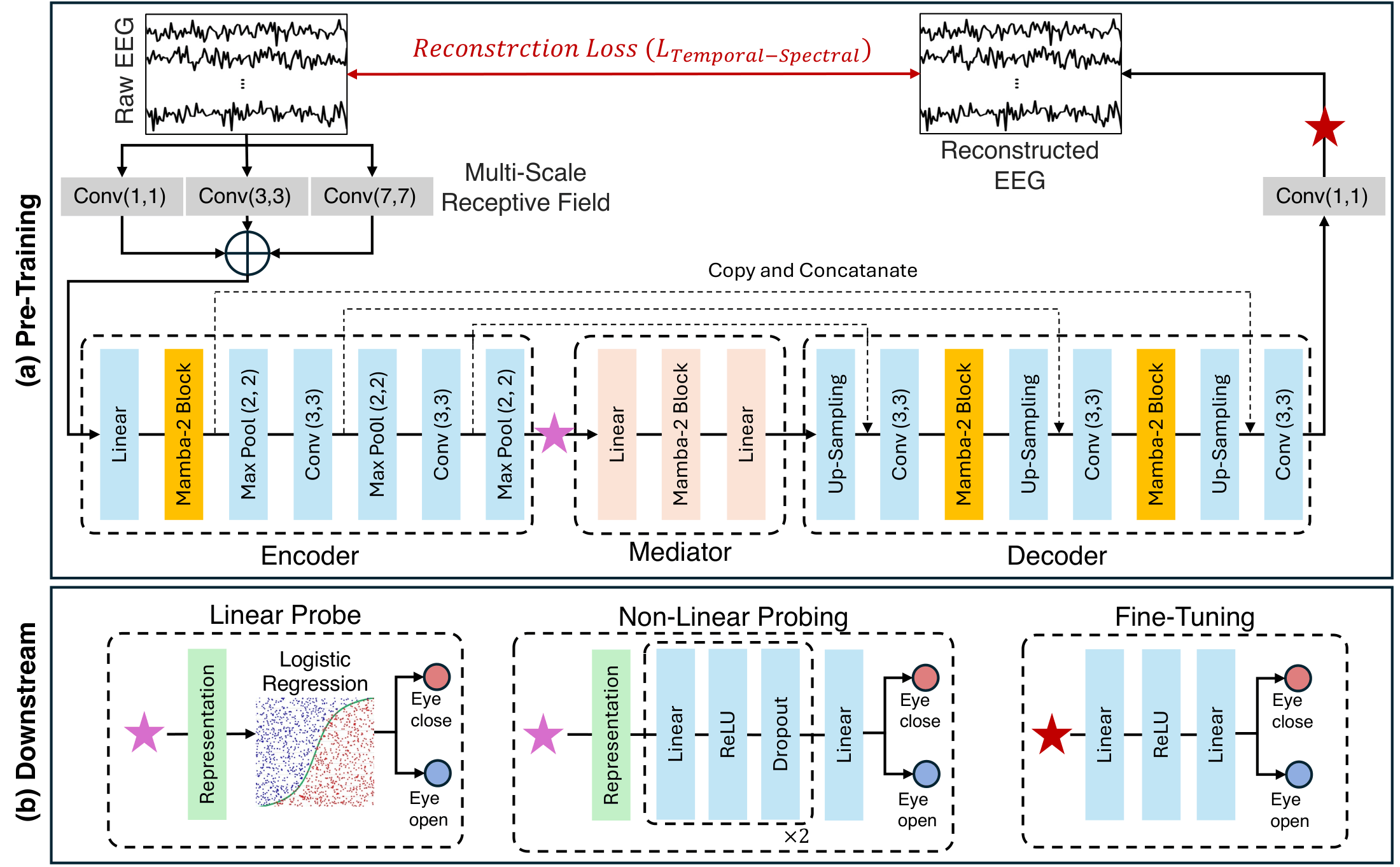
- 2026.10.03NeurIPS 2026 SAMBA: Toward an EEG Foundation Model via Differential Mamba and Coordinate-Driven Spatial Embedding accepted to the NeurReps Proceedings Track at NeurIPS 2026.
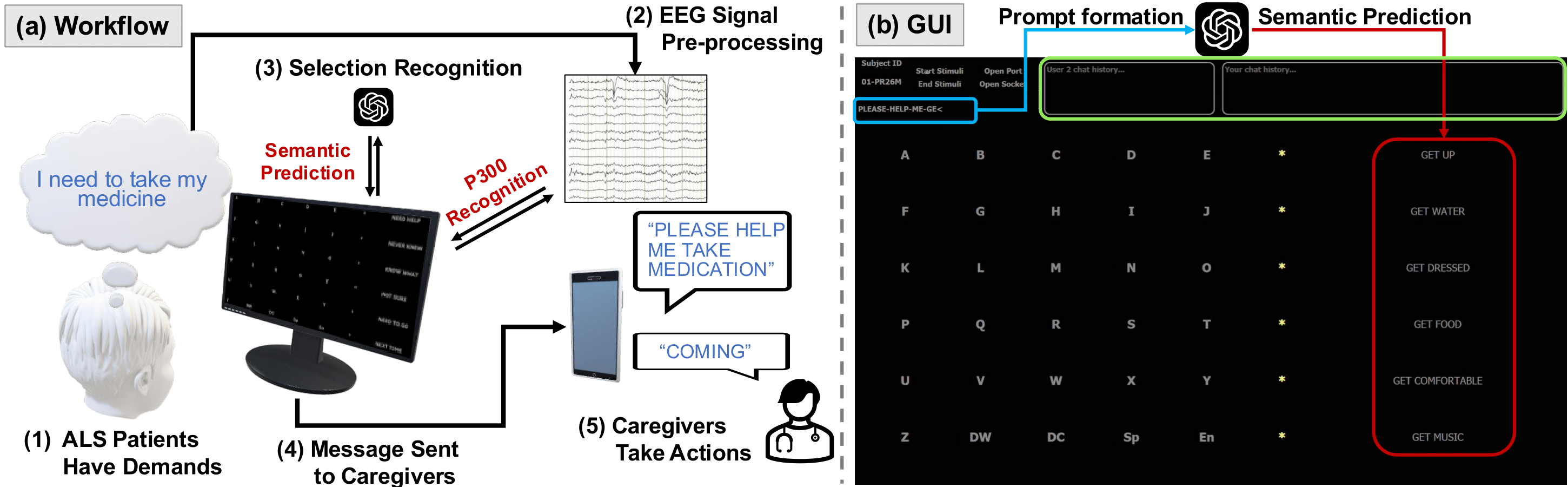
- 2026.04.15TBME ChatBCI-Assist: An Intent-Based P300 Speller with A Locally-Deployed LLM and Adaptive Stopping Strategy Enabling Record Online Spelling Performance accepted by IEEE Transactions on Biomedical Engineering.
- 2026.04.15EMBC 2026 Improving Spelling Performance of LLM-based P300 Speller BCIs using Circular Nonadjacent Flashing and Cross-Validated Calibration accepted at EMBC 2026.
- 2026.04.15EMBC 2026 Llama-4-ALS: A Locally Deployable LLM, Tuned with LoRA and Dynamic Hierarchical Data Augmentation, for Speller-Based AAC accepted at EMBC 2026.
- 2026.01.13ISBI 2026 Neural Dynamics of Time Perception Under Acute Pain: An Auditory Temporal Bisection Study accepted at IEEE ISBI 2026.
- 2025.10.23Sci. Reports ChatBCI, A P300 Speller BCI with Context-Driven Word Prediction Leveraging Large Language Models accepted by Scientific Reports (Nature Portfolio).
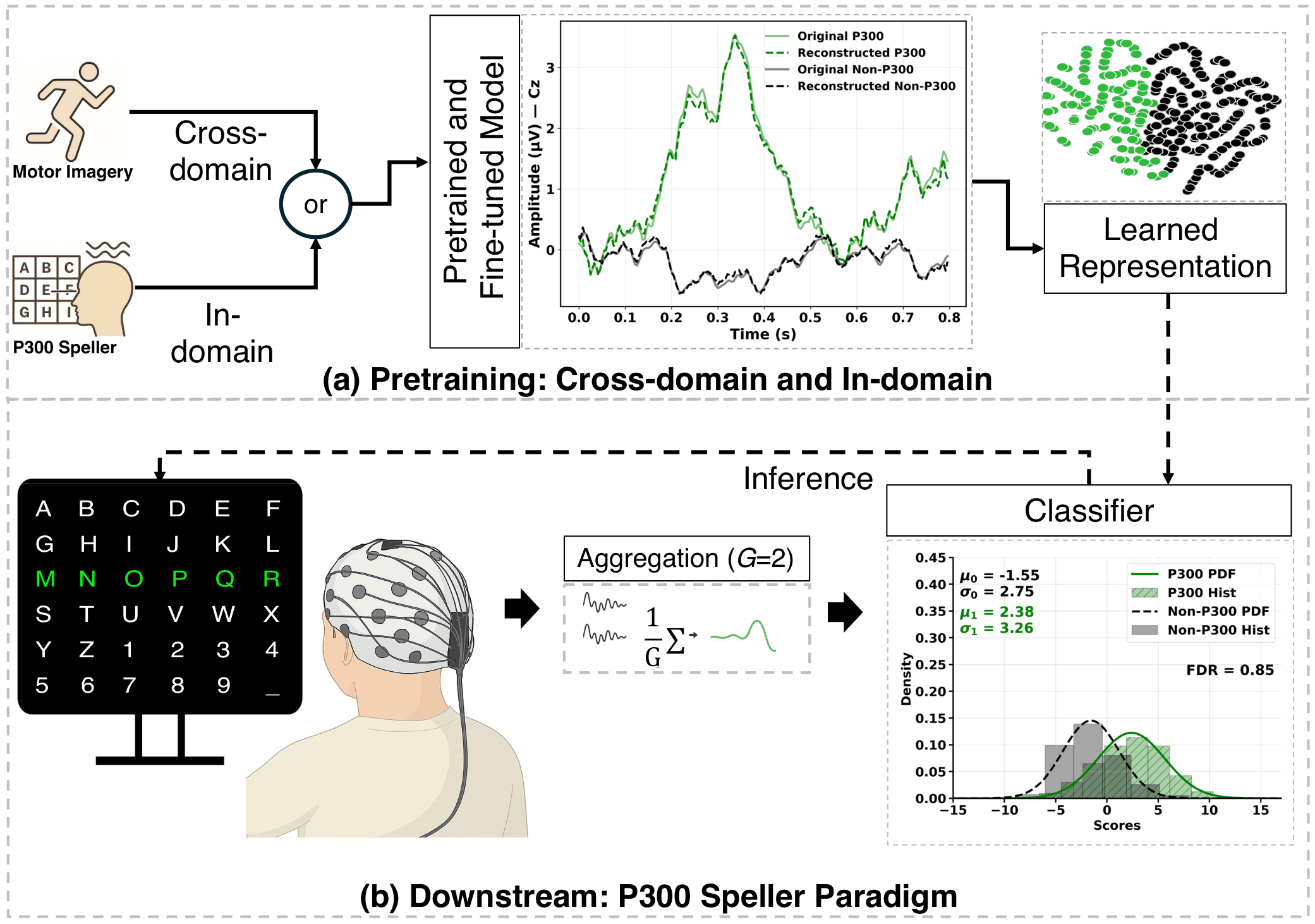
- 2025.09.22NeurIPS W SpellerSSL: Self-Supervised Learning with P300 Aggregation for Speller BCIs accepted at NeurIPS Data on the Brain & Mind Workshop.
- 2025.09.20ICDM W An Efficient Self-Supervised Framework for Long-Sequence EEG Modeling accepted at IEEE ICDM AI for Time Series Workshop.
- 2025.09.14TKDE A Geometric Approach to k-means accepted by IEEE Transactions on Knowledge and Data Engineering.
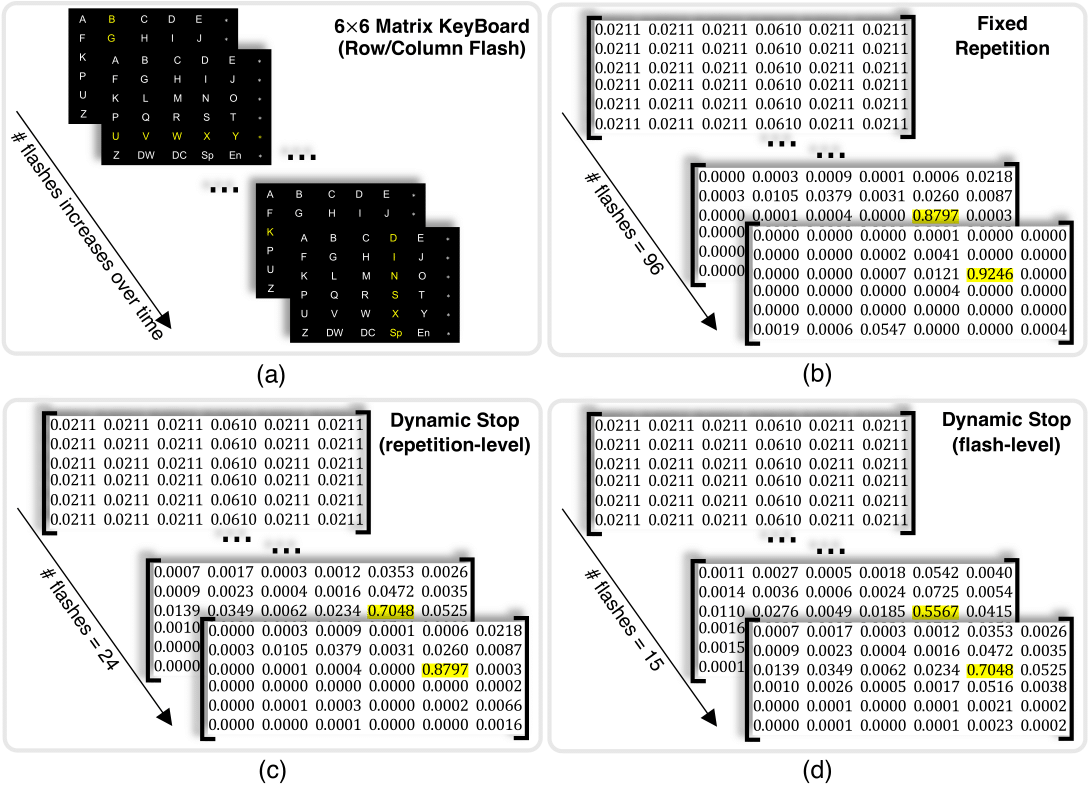
- 2025.08.04NER 2025 Enhancing Typing Speed in LLM-based P300 Speller BCIs Using A New Data-Driven Dynamic Stopping Strategy accepted at IEEE NER 2025.
- 2025.08.04NER 2025 Longest Sustained Cortical Activity Duration in Temporal Bisection Task Aligns with Geometric Mean for Log-Spaced Probes accepted at IEEE NER 2025.
- 2025.04.08EMBC 2025 ChatBCI4ALS: A High-Performance, LLM-Driven Intent-Based BCI Communication System for Individuals with ALS accepted at EMBC 2025.
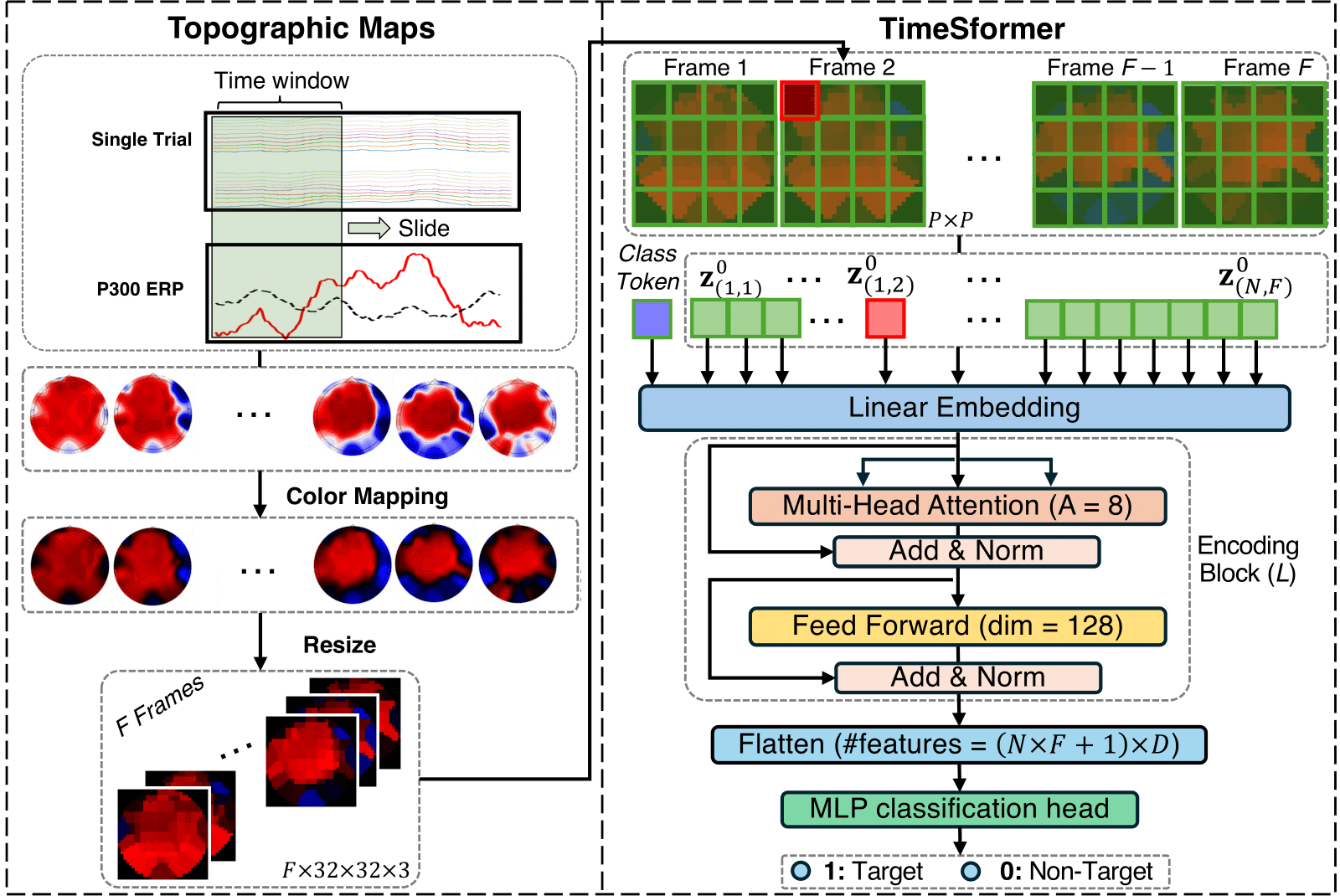
- 2025.01.02ISBI 2025 TopoEEG: a TimeSformer-Based Topographic Image Representation Method for Early Single-Trial Detection of P300 accepted at IEEE ISBI 2025.
- 2024.09.20IEEE Brain ChatBCI: A Fast P300 Speller Brain-Computer Interface Incorporating Generative AI-Based Word Prediction accepted at 2024 IEEE Brain Discovery & Neurotechnology Workshop.
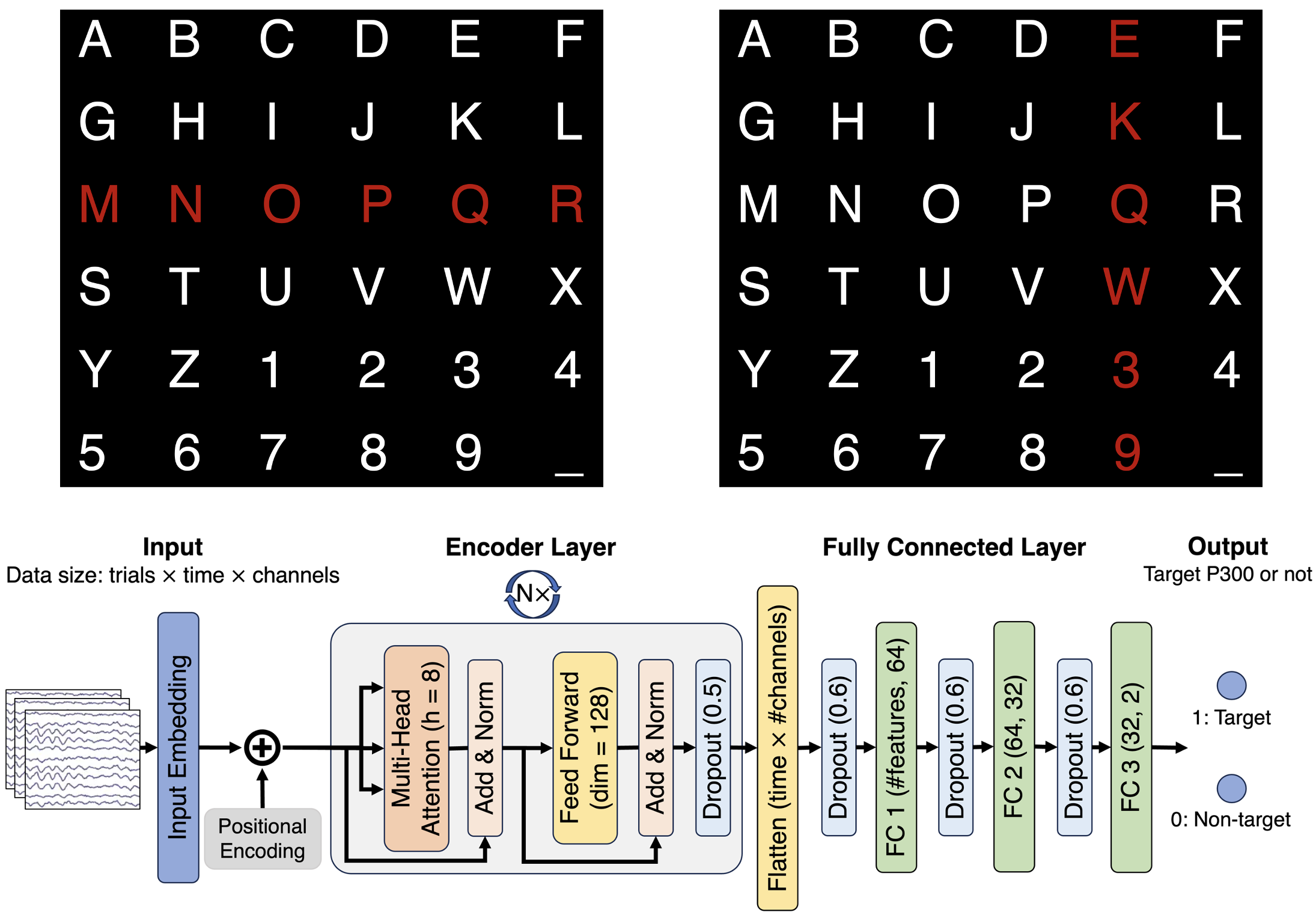
- 2024.07.29Asilomar P3T: A Transformer Model for Enhancing Character Recognition Rates in P300 Speller Systems accepted at Asilomar ACSSC 2024.
🏆 Awards & Honors
- 2026.01.06Award Selected as a finalist in the EMBC 2026 Student Paper Competition, 2026 48th Annual International Conference of Engineering in Medicine and Biology in Toronto, Canada.
- 2026.01.06Award Research Excellence Award, 2025–2026 Cycle for ECE Development and Research Excellence Award.
- 2025.03.04Award Travel Award, 2024–2025 Research & Conference Travel Award by School of Graduate Studies (SGS).
- 2025.02.28Award Travel Award, 2024–2025 Rutgers Brain Health Institute Trainee Travel Award.
- 2024.09.20Award Travel Award, 2024 IEEE Brain Discovery & Neurotechnology Workshop.
- 2024.05.10Award Best TA Award, Rutgers ECE Department, 2023 Fall.
🎉 Career Milestones